How are 3D-printed customized braces made? Every bracket starts with a digital scan of your teeth, gets designed in software to match one specific tooth, then is printed in ceramic and delivered in a bonding tray built for exact placement. No two sets are ever alike, because no two smiles are alike either.
What Are 3D-Printed Customized Braces?
3D-printed customized braces are ceramic brackets designed and printed individually for each tooth in your mouth. Instead of pulling a bracket off a shelf, your board-certified orthodontist maps your exact tooth anatomy digitally, then a lab prints a bracket base, slot, and bonding tray built only for you.
Traditional brackets are mass-produced in a handful of sizes and shapes, engineered to fit an “average” tooth. The trouble is that average teeth don’t exist. When a flat, generic base meets a curved, textured tooth surface, the bond relies on a thicker layer of adhesive, and the bracket’s built-in prescription may not match what that particular tooth actually needs.
Customized brackets solve that mismatch with three pieces working together:
- A 100% customized bracket base contoured to the exact curvature of your individual tooth surface
- A 100% customized prescription slot angled to deliver the torque, tip, and rotation your treatment plan calls for
- A 100% customized bonding tray that seats every bracket in the precise position it was designed for
LightForce is an FDA-cleared 3D-printed bracket system used in orthodontic practices today, and the brackets are printed from polycrystalline alumina ceramic. That material is biocompatible, tooth-colored, and strong enough to handle the forces of active tooth movement. Griffin & Errera Orthodontics is a LightForce Authorized Provider and uses LightForce clear braces for patients of all ages who want a fixed appliance that blends in.
Here’s the short version: your teeth are unique, just like you, so your brackets should be too.
How 3D-Printed Braces Are Made: The Step-by-Step Process
3D-printed customized braces are made in six stages: a digital scan of your teeth, a digital plan for final tooth positions, CAD design of each bracket base, a per-tooth prescription, printing and sintering of the ceramic brackets, and printed bonding trays that place every bracket exactly where it was planned.
Step 1: What Happens During Digital Scanning?
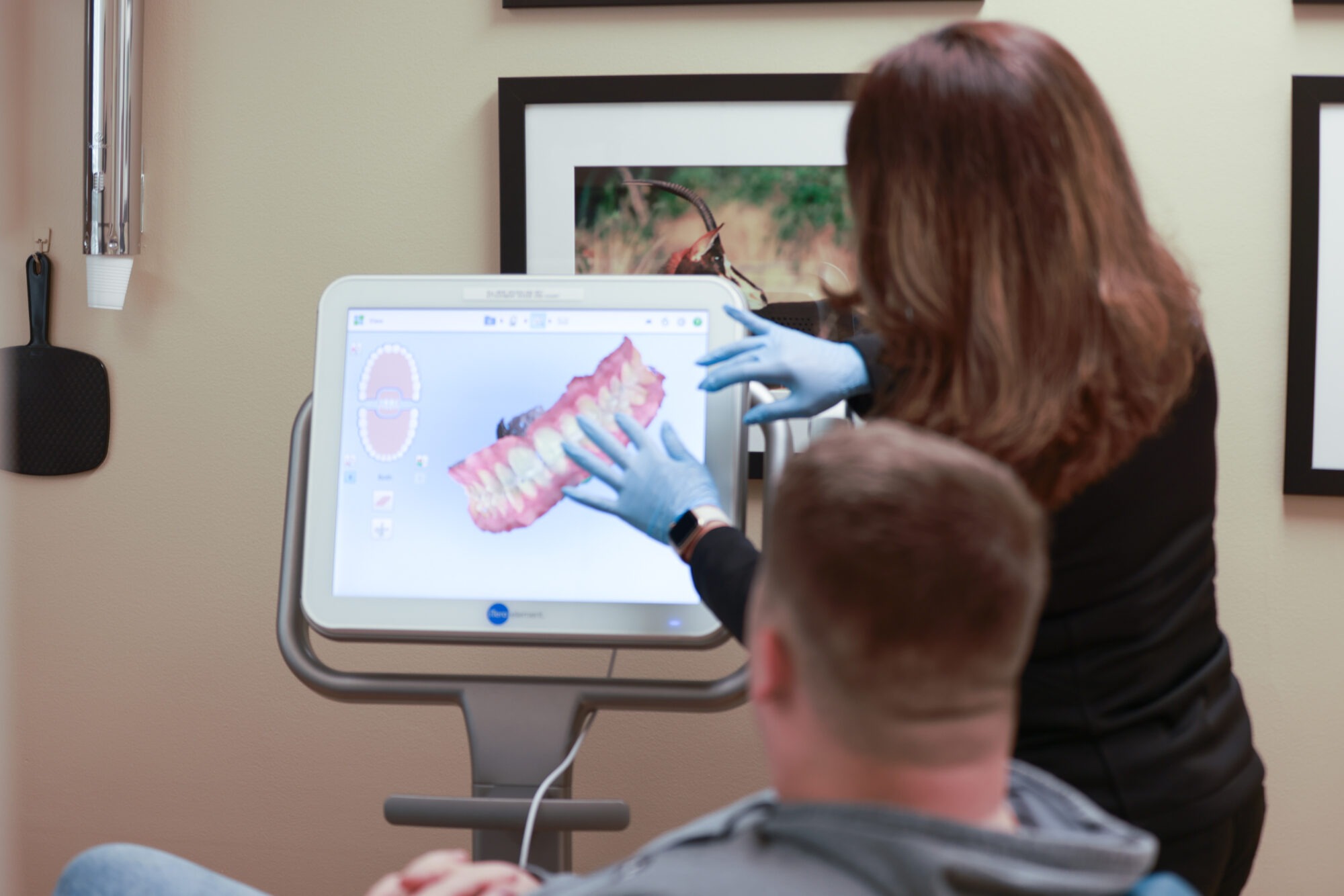
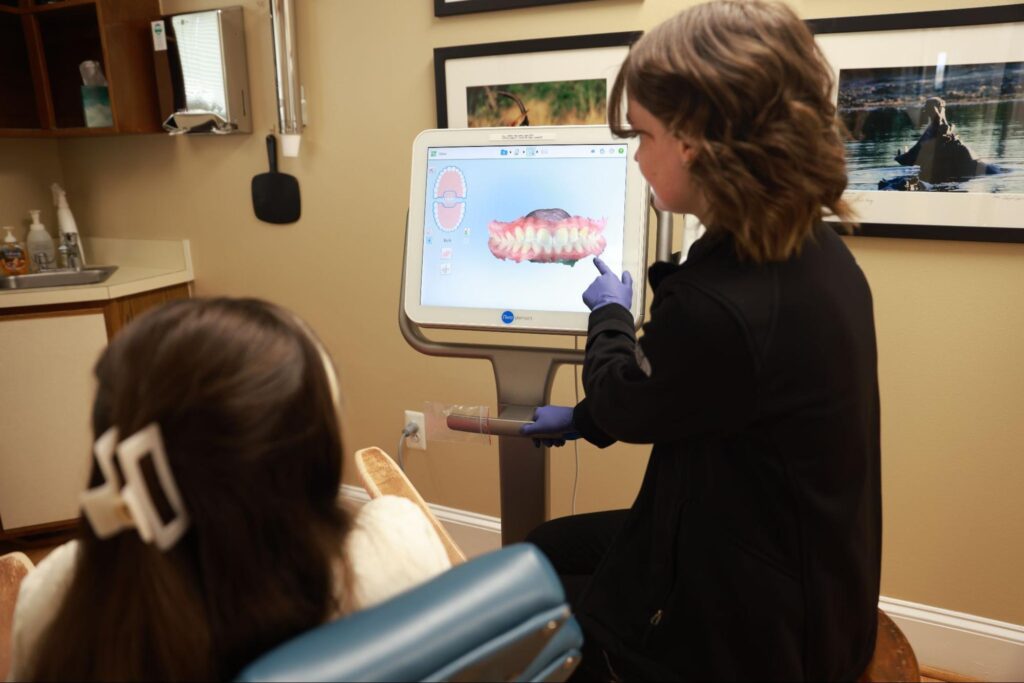
A handheld intraoral scanner captures thousands of images of your teeth and gums, stitching them into a precise 3D model in a few minutes. This digital mapping replaces the trays of putty most people remember, so there’s no gagging and no messy material. Most patients of all ages are pleasantly surprised by how quick and easy the whole thing feels, and plenty of them get a kick out of watching their own smile build itself on the screen in real time. The scan becomes the foundation for everything that follows, so this handful of minutes matters a great deal more than it looks.
Step 2: How Is Your Personalized Plan Designed?
Dr. Griffin and Dr. Errera then design your finished result before a single bracket is bonded. Working in planning software, they move each tooth on screen into its ideal final position, accounting for your bite, your midline, your arch shape, and your smile line. This is where your personalized plan gets built, not picked off a menu.
Step 3: How Is the 100% Customized Bracket Base Designed?
CAD software reads the surface topography of each tooth from your scan and designs a bracket base that matches it like a puzzle piece. Bumps, grooves, and curves all get accounted for. Because the base sits flush against enamel, the adhesive layer stays thin and uniform.
Step 4: What Is a 100% Customized Prescription Per Tooth?
Every bracket slot is then angled specifically for the tooth it will sit on. Torque, tip, and rotation values are calculated so that a straight wire, engaged in those individualized slots, drives your teeth toward the exact positions planned in step two. Stock brackets use averaged prescription values across a whole arch. Customized brackets do the math tooth by tooth.
Step 5: How Are the Brackets Printed, Sintered, and Finished?
The bracket designs are sent to the manufacturing lab, where they’re 3D printed in ceramic, then sintered in a high-temperature furnace that fuses the material into a dense, strong final form. After sintering, each bracket is polished and inspected against its digital file for accuracy before it ships.
Step 6: What Do 100% Customized Indirect Bonding Trays Do?
Placement is where a lot of orthodontic outcomes are won or lost. To protect the plan, the lab also prints 100% customized indirect bonding trays that hold your brackets in their designed positions. At your bonding visit, your teeth are prepared, the tray is seated, and every bracket lands exactly where the software intended. Placement that once depended on freehand eyeballing becomes repeatable.
The whole process, from scan to bonding day, typically takes a few weeks while your brackets are designed, printed, and shipped.
Benefits of 100% Customized 3D-Printed Brackets
The three biggest benefits of 100% customized 3D-printed brackets are precision placement that cuts down on mid-treatment wire bending, a low-profile ceramic design that sits more comfortably against the lip and cheek, and a discreet tooth-colored look. Many patients also see fewer adjustment visits, because the detailed planning work happens before bonding day rather than during it.
Customized brackets change the sequence of orthodontic treatment. The precision work happens up front, in software and in the lab, instead of at the chair over many months of adjustments.
- Fewer wire bends and mid-course corrections. When brackets are positioned by tray and prescribed per tooth, there’s less need to compensate later with custom wire bends or bracket repositioning.
- Better fit, better bond, better comfort. A base that hugs your tooth anatomy sits lower and flatter, which means less bulk against your lip and cheek. LightForce clear braces tend to be more comfortable than traditional brackets because they fit every tooth precisely.
- Potentially fewer visits. Clinical reports from practices using customized brackets describe shorter overall treatment and fewer adjustment visits compared with stock appliances.
- A discreet look. Tooth-colored polycrystalline ceramic reflects light similarly to enamel, so the brackets look far less noticeable than metal in photos and conversation.
- A finish designed in advance. Your final tooth positions are approved before bonding day, which gives your treatment a clear target from the very first visit.
There’s a practical benefit too. Because the brackets are 100% customized and lower profile, brushing and flossing around them tends to be more manageable, and good hygiene during treatment protects the result you’re working toward.
3D-Printed Customized Braces vs. Traditional Braces vs. Clear Aligners
There’s no single winner here. The right choice depends on how complex your bite is, how visible you want your treatment to be, and how consistent you’ll be with wearing something removable.
| Modern Metal Braces | 3D-Printed Custom Ceramic Brackets | Clear Aligners | |
|---|---|---|---|
| Appliance design | Stock brackets in preset sizes | Each bracket designed for one specific tooth | Series of aligners made from your digital scan |
| Appearance | Visible metal brackets and wires | Tooth-colored, low profile | Nearly invisible when worn |
| Placement method | Freehand or generic tray | 100% customized indirect bonding tray | No brackets required |
| Treatment time | Varies by case, often 12 to 24 months | Varies by case, often 12 to 24 months | Varies by case, often 12 to 24 months |
| Visit frequency | Typically every 4 to 8 weeks | Typically every 6 to 10 weeks | Typically every 8 to 12 weeks |
| Removable? | No, fixed 24/7 | No, fixed 24/7 | Yes, removed to eat and brush |
| Compliance needed | Elastics and hygiene | Elastics and hygiene | 20 to 22 hours of daily wear |
| Relative cost | Most economical option | Higher due to lab design and printing | Comparable to ceramic, varies by case |
Modern metal braces remain the orthodontic workhorses of our field. They handle nearly every kind of correction, they’re the most economical route, and decades of results back them up.
100% customized ceramic brackets appeal to teens and adults who want that same fixed reliability without the metal look. They work around the clock whether you remember them or not.
Clear aligners give you the most discreet option and total freedom at mealtimes, but they only work while they’re in your mouth. If a busy schedule or a forgetful teenager makes 22 hours a day unrealistic, a fixed appliance is usually the safer bet.
What Affects the Cost of 100% Customized 3D-Printed Braces?
100% customized 3D-printed braces usually cost more than stock metal brackets because each bracket is digitally designed, printed, and finished in a lab before it reaches your mouth. Your final fee depends on case complexity, treatment length, whether one or both arches are treated, and what’s bundled in, like retainers.
| Cost Factor | What It Means for Your Fee |
|---|---|
| Case complexity | Rotations, bite correction, and crowding that need auxiliaries add planning and chair time |
| Treatment length | Longer active treatment means more visits and more materials |
| Arches treated | Upper-only or lower-only treatment costs less than both arches |
| Lab and design work | Bracket design, printing, sintering, and bonding trays carry a lab fee stock brackets don’t |
| What’s included | Retainers, emergency visits, and post-treatment follow-up may be bundled into the quoted fee |
| Insurance and savings accounts | Orthodontic benefits, FSA, and HSA dollars generally apply the same as they would for any braces |
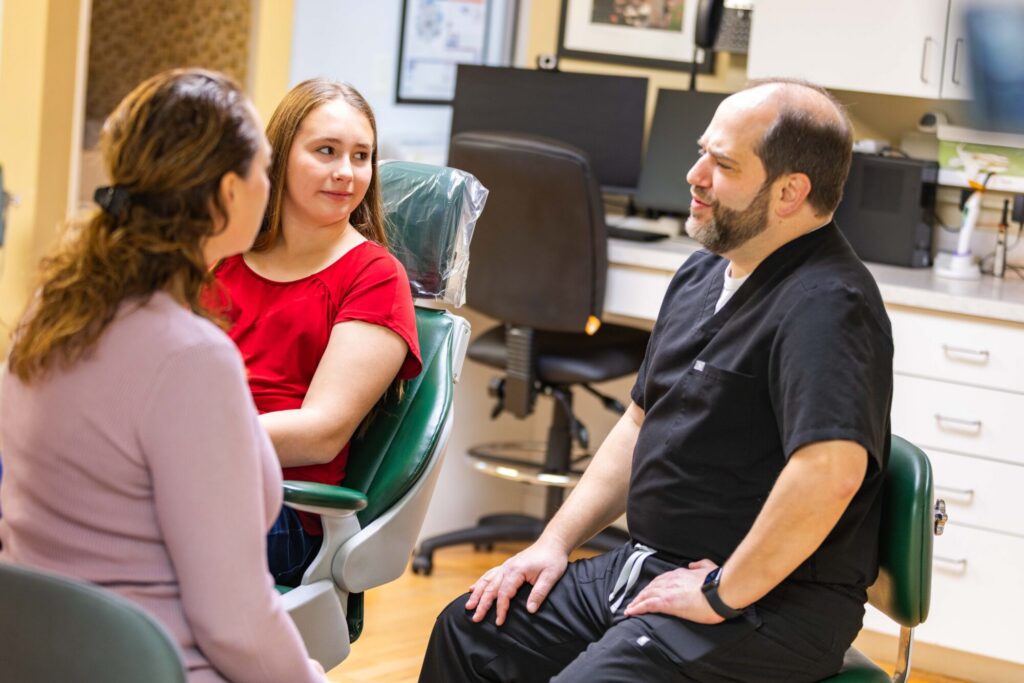
Fewer adjustment appointments and less chair time can offset part of that added lab expense, both in dollars and in time away from work or school. Most orthodontic practices, including ours, offer flexible payment options and in-house payment plans so the fee is spread out rather than paid all at once. Exact numbers get quoted at your free consultation, after Dr. Griffin or Dr. Errera has actually looked at your bite.
Who Is a Good Candidate for 3D-Printed Braces?
Most people who qualify for traditional braces qualify for customized ceramic brackets. The appliance handles the same corrections, just with an individualized fit.
Good candidates typically include:
- Teens and adults with crowding, spacing, rotations, or bite issues such as overbite, underbite, or crossbite
- Anyone who wants a fixed appliance with a discreet look, particularly professionals and older teens who’d rather not show metal
- Patients who know they won’t wear aligners consistently, since fixed brackets work whether you think about them or not
- People with healthy teeth and gums, because decay and gum disease need treatment before bonding day
- Complex bite cases, which may pair customized brackets with elastics or additional appliances to correct jaw relationships
There are a few situations where another option fits better. Patients with certain ceramic sensitivities, very short-term cosmetic cases, or a strong preference for removability may do better with clear aligners or modern metal braces. That’s the whole point of a free consultation: matching the appliance to the person, not the other way around.
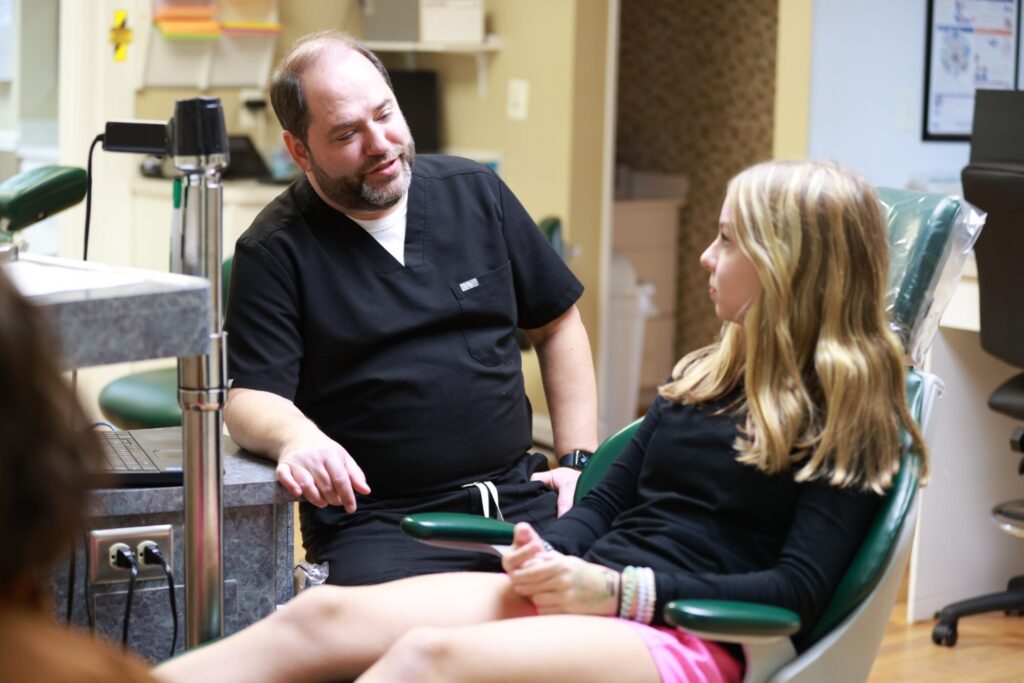
Griffin & Errera Orthodontics also offers virtual consultations if you’d like an initial opinion before coming in. Every new patient starts with a free consultation at one of our 3 convenient locations, where Dr. Griffin or Dr. Errera reviews your bite, listens to what’s been bothering you about your smile, answers your family’s questions, and walks you through what a personalized plan would actually involve. Patients of all ages are welcome, se habla español, and there’s never any pressure to decide the same day.
Frequently Asked Questions About 3D-Printed Braces
How long does it take to make 3D-printed braces?
From your digital scan to your bonding visit, the design, printing, and shipping process typically takes a few weeks. Your board-certified orthodontist spends part of that window building and approving your personalized plan, then the lab prints, sinters, polishes, and quality-checks each bracket. You’ll leave your scan visit with a bonding date already on the calendar.
Are 3D-printed brackets strong enough?
Yes. Polycrystalline alumina ceramic is sintered at high temperature, which fuses the printed material into a dense, durable structure built to withstand normal chewing and orthodontic forces. Ceramic brackets do behave differently than metal during removal, so your board-certified orthodontist uses specific debonding instruments designed for them. Hard candy, ice, and similar foods should still be avoided.
Do customized braces work faster than regular braces?
Customized braces often work faster than regular braces, because the brackets are positioned by tray and prescribed per tooth, which cuts down on the mid-treatment repositioning and custom wire bending that add extra months to so many cases. Clinical reports describe shorter average treatment times with customized brackets. It isn’t a guarantee, though. Your biology, your bite, and your cooperation with elastics still drive the timeline.
Are 3D-printed braces more comfortable to wear?
Most patients report less irritation with customized ceramic brackets. The bases sit flush against the tooth and the brackets have a lower profile, so there’s less bulk rubbing against your lips and cheeks. You’ll still feel some tenderness for a few days after bonding and after wire changes, since that’s simply teeth responding to gentle pressure. Soft foods and over-the-counter relief help during those first few days.
Can 3D-printed brackets stain or discolor?
The ceramic brackets themselves resist staining well. What can discolor over time is the clear elastic tie holding the wire in place, and those get swapped at every adjustment visit anyway. Cutting back on coffee, tea, red wine, and tobacco keeps things looking crisp, and consistent brushing does most of the work.
Are 3D-printed braces covered by insurance?
Orthodontic insurance benefits generally apply to customized brackets the same way they apply to any other braces, since coverage is usually tied to the treatment rather than the bracket type. FSA and HSA dollars can typically be used as well. Our team will review your benefits with you and give you a clear breakdown before treatment starts, with no hidden fees tucked into the fine print. When you’re ready to shift your smile in gear, a free consultation is the easiest first step, and your smile is in good hands with Dr. Griffin and Dr. Errera.