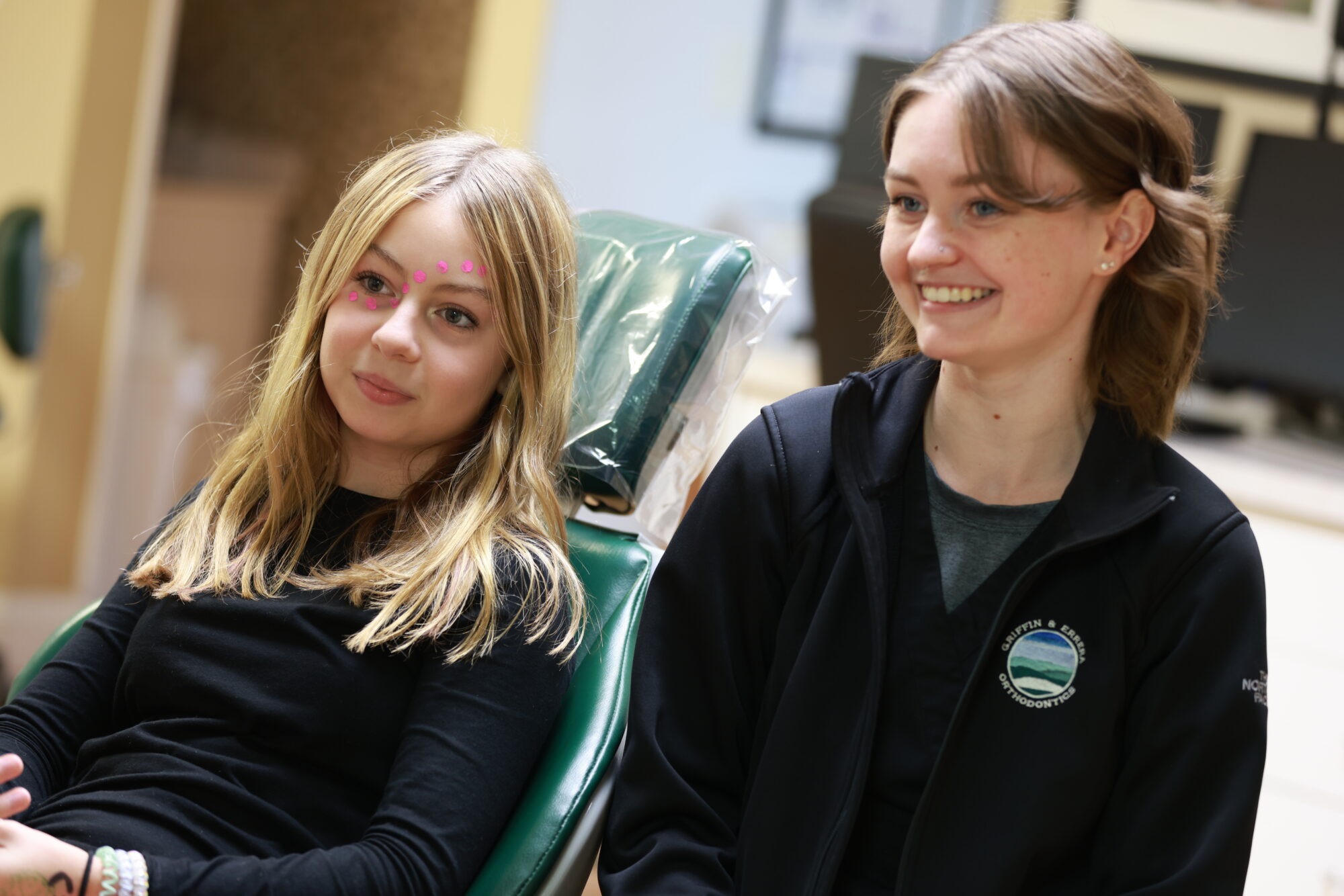
Understanding how metal braces work helps you make a confident decision about your smile. Maybe you’re a teen gearing up for high school photos, or maybe you’re an adult ready to make a change for yourself. Either way, this guide walks you through the biology, timeline, and real-life factors that shape treatment. At Griffin & Errera Orthodontics, we’ve been transforming smiles for over 40 years, and modern metal braces remain one of our most reliable tools for patients of all ages.

What Are Metal Braces?
Metal braces are a fixed orthodontic appliance made of three main parts: small brackets bonded to each tooth, a thin archwire that connects them, and elastic ligatures (tiny colored bands) that hold the wire in place. The brackets and wire work together to apply steady, gentle pressure that guides teeth into their correct positions over time.
Today’s modern metal braces are made from medical-grade stainless steel, chosen for its strength, biocompatibility, and durability. The brackets themselves are much smaller and smoother than the bulky versions many adults remember from decades past. That means less irritation and a slimmer feel against your cheeks and lips.
Because they’re bonded directly to your teeth, metal braces stay on 24/7. You don’t have to remember to wear them, and you can’t lose them. This fixed design makes them one of the most dependable options for virtually any orthodontic case, from mild crowding to complex bite correction.
Dr. Griffin and Dr. Errera at Griffin & Errera Orthodontics use modern metal braces as part of a personalized plan built around your unique smile and goals.
How Metal Braces Work to Move Teeth at Any Age
Metal braces move teeth through a biological process called bone remodeling. Constant light pressure from the archwire pushes a tooth in a specific direction. On the pressure side, bone breaks down slightly to make room. On the opposite side, new bone forms to hold the tooth in its new position. This cycle repeats, little by little, until your teeth reach their planned alignment.
Teen Biology vs. Adult Biology
Teens have a biological advantage: faster bone turnover and active jaw growth. Their bodies respond quickly to orthodontic forces, which is why teen treatment often moves at a steady clip. Dr. Griffin and Dr. Errera can also pair treatment with natural growth to correct bite issues more easily during this window.
Adult bone remodels more slowly, but it remodels reliably. The results are just as predictable, which is why adult orthodontics has become so popular. You just need a little more time for the biology to catch up.
The Treatment Phases
Most patients move through four phases:
- Alignment: Teeth are leveled and rotated into basic position.
- Bite correction: Overbites, underbites, and crossbites are addressed with specific wire sequences and sometimes elastics.
- Detailing: Small adjustments fine-tune the fit of upper and lower teeth.
- Retention: Once braces come off, retainers hold the new positions while bone fully settles.
You’ll visit us every 4 to 8 weeks for adjustments. These short check-ins let your orthodontist swap wires, tighten elastics, and keep your smile moving in the right direction.
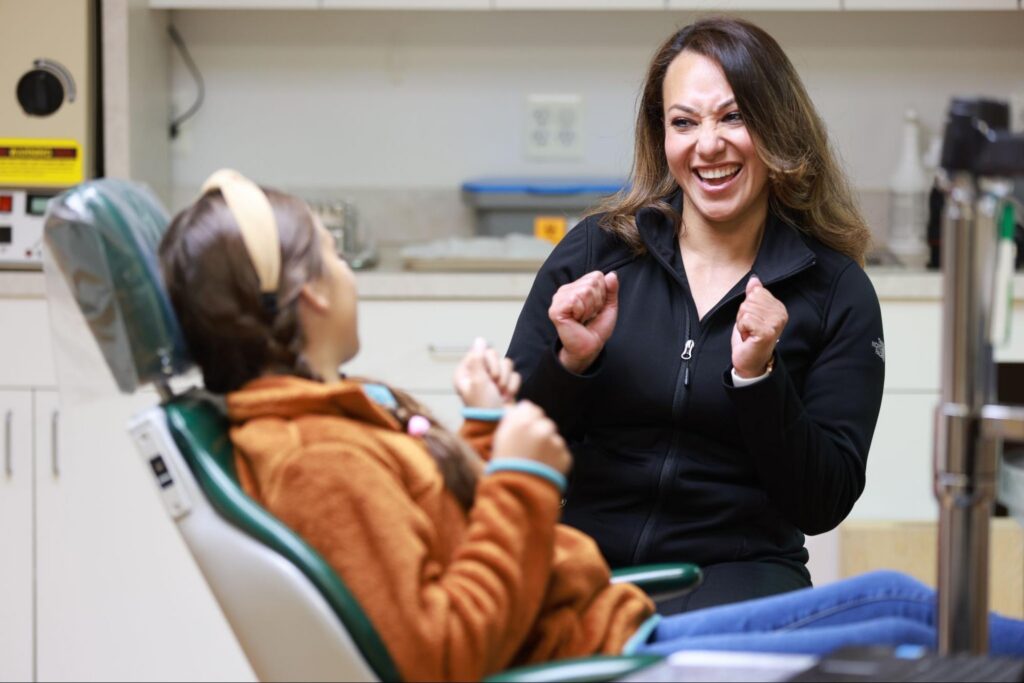
Benefits of Metal Braces for Teens and Adults
Metal braces offer unique advantages depending on your stage of life, and they share a core set of benefits that make them a top choice at Griffin & Errera Orthodontics.
Benefits for Teens
- Faster results: Active bone turnover means teeth tend to respond quickly.
- Growth-paired corrections: Treating during growth spurts can resolve bite issues more easily.
- Peer normalization: Braces are common in middle and high school, so teens often feel right at home with classmates wearing them too.
- Fun customization: Colored elastic ligatures let teens show school spirit, holiday themes, or personal style at every visit.
Benefits for Adults
- Proven for complex cases: Metal braces handle rotations, deep bites, and severe crowding that other options sometimes can’t.
- No compliance pressure: Because they’re fixed, you don’t have to remember to put anything back in. Your treatment keeps progressing even on your busiest workdays.
- Confidence boost: Many adults say finally fixing their smile is one of the most rewarding things they’ve done for themselves.
Shared Benefits for Everyone
- Handles severe crowding, spacing, overbites, underbites, and crossbites
- Predictable, 24/7 continuous progress
- Supports better long-term oral health by making teeth easier to clean once aligned
- Built to withstand years of chewing, talking, and daily life without constant repairs or replacements
The team of experts at Griffin & Errera Orthodontics treats patients of all ages, from children and teens to adults in every chapter of life. Your smile is unique, just like you, and your treatment plan should be too.
Teens vs. Adults: Side-by-Side Comparison
Here’s a quick look at how metal braces treatment compares between teens and adults:
| Factor | Teens | Adults |
|---|---|---|
| Typical treatment time | 12 to 24 months | 18 to 36 months |
| Bone response | Faster remodeling | Slower but reliable |
| Initial soreness | Mild to moderate | May feel slightly more pronounced |
| Jaw growth | Active, helps bite correction | Complete, limits certain corrections |
| Lifestyle factors | School, sports, orthodontic-friendly meals | Work meetings, social events, weddings |
| Pre-existing dentistry | Rarely a concern | Crowns, bridges, implants require planning |
| Compliance support | Parents help with reminders | Self-managed |
| Oral hygiene focus | Learning lifelong habits | Protecting existing restorations |
Adults often ask whether these differences change the quality of results. They don’t. The timeline may stretch a bit, and the plan may need extra coordination around existing restorations, but the finished smile can be just as beautiful.
Dr. Griffin and Dr. Errera build each personalized plan around your specific biology, lifestyle, and goals. You’ll never find cookie-cutter treatment at Griffin & Errera Orthodontics.
Who Is a Good Candidate for Metal Braces
Metal braces work for a wide range of patients. You may be a great candidate if you fit one or more of these profiles:
- Teens ages 11 to 17: Most permanent teeth have erupted, and natural growth creates an ideal treatment window.
- Adults with healthy gums and adequate bone support: Age isn’t the limiting factor. Oral health is.
- Patients with crowding, spacing, overbites, underbites, or crossbites: Metal braces handle all of these effectively.
- Patients needing complex corrections: Severe rotations, impacted teeth, and major bite issues often respond better to braces than to aligners.
- Patients with existing crowns, bridges, or implants: With careful planning, Dr. Griffin and Dr. Errera can design a plan that works around your current restorations.
- Anyone committed to good oral hygiene and regular visits: Brushing, flossing, and keeping your adjustment appointments are the keys to a successful outcome.
The best way to find out if metal braces are right for you is to schedule a free consultation with our board-certified expert orthodontists. We’ll take a close look at your smile, discuss your goals, and let you know all your options.
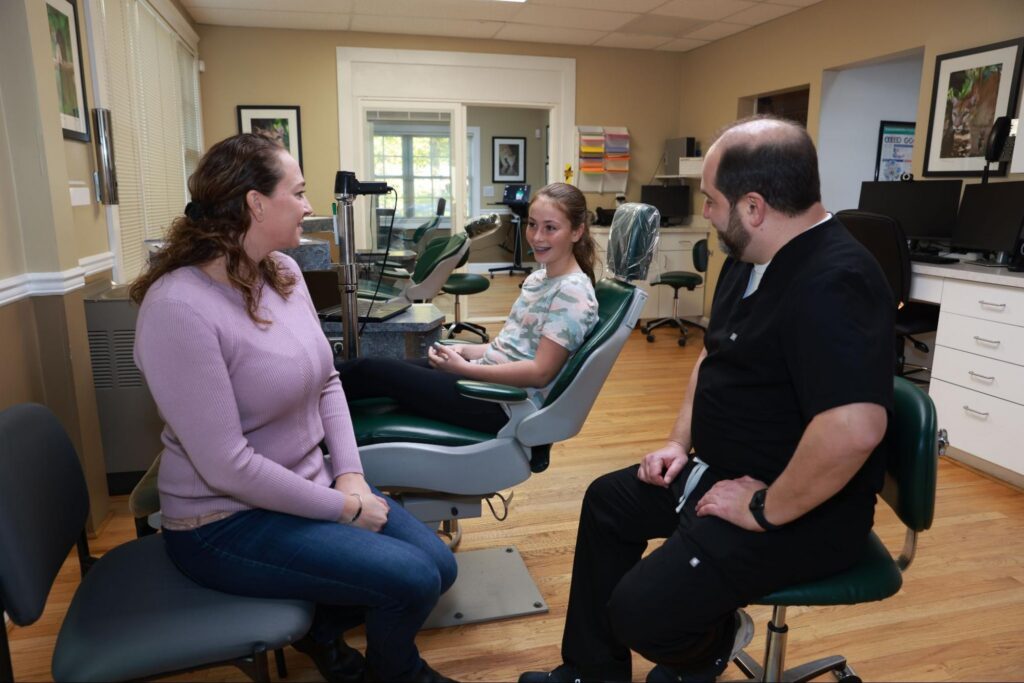
Frequently Asked Questions
How painful are braces on a scale of 1 to 10?
Most patients describe the discomfort as a 2 to 3 out of 10, mostly in the first few days after placement and after adjustments. The sensation is more of a dull pressure or soreness than sharp discomfort. Over-the-counter remedies, soft foods, and orthodontic wax usually handle it well. The feeling fades within a few days as your mouth adapts.
Is 14 too old for braces?
Not at all. Age 14 is actually one of the most common ages to start treatment. By this point, most permanent teeth have come in, and natural growth is still active enough to help with bite corrections. Many of our teen patients at Griffin & Errera Orthodontics start treatment between ages 11 and 17.
What are the downsides of metal braces?
Metal braces are visible, so some patients prefer the less visible look of LightForce clear braces or Invisalign clear aligners. You’ll also need to avoid certain foods like hard candy, popcorn, and sticky caramels. Brushing and flossing take a bit more effort, and you may experience brief soreness after adjustment visits.
Do adults take longer than teens with metal braces?
Often, yes. Adult bone remodels more slowly than teen bone, so treatment typically runs 18 to 36 months compared to 12 to 24 months for teens. The results, however, are just as reliable. Dr. Griffin and Dr. Errera design your custom treatment plan with realistic timelines based on your biology and case complexity.
Is it ever too late to get metal braces?
It’s rarely too late. As long as you have healthy gums and adequate bone support, you can straighten your teeth at almost any age. We’ve seen patients in their 50s, 60s, and beyond achieve beautiful results. Orthodontics for all ages is one of the hallmarks of our practice.
Can adults get the same results as teens?
Yes. The finished smile depends on the quality of the plan and your commitment to the process, not your age. Adults may need a bit more time and sometimes coordination with other restorations, but the aesthetic and functional results can be every bit as impressive.
Ready to Explore Metal Braces?
If you’re considering metal braces for yourself or your teen, the next step is simple: schedule a free consultation with the board-certified expert orthodontists at Griffin & Errera Orthodontics. You’ll get a clear look at your options, a realistic timeline, and a personalized plan built around your unique smile.
We’d love to welcome you at any of our 3 convenient locations:
- Middleburg Office: 107 West Federal St., Middleburg, VA. Call 540-687-4000.
- Warrenton Office: 179 Broadview Ave., Warrenton, VA. Call 540-347-1888.
- Culpeper Office: 505 Radio Ln., Culpeper, VA. Call 540-825-8001.
Experience the Griffin & Errera difference and discover why patients across Northern Virginia trust us with their smiles. Book your free consult today.