
Wondering how orthodontists create a treatment plan for each patient? It starts with a detailed look at your smile, your bite, and your goals, then combines diagnostic imaging, clinical expertise, and modern technology to build a personalized plan just for you. At Griffin & Errera Orthodontics, every orthodontic treatment plan is built around the individual, never a template.
Below, you’ll learn exactly how the process works, what tools orthodontists use, and how to know if you’re a candidate for care.

What Is an Orthodontic Treatment Plan?
An orthodontic treatment plan is a personalized blueprint that outlines your diagnosis, the appliances you’ll wear, your treatment timeline, and the specific goals for your smile. It’s built from your diagnostic records, not a one-size-fits-all template, and it reflects the unique shape of your teeth, bite, and jaw.
A strong plan covers several core components:
- Tooth movement goals based on your current alignment
- Bite correction to address overbite, underbite, or crossbite
- Appliance type, such as LightForce clear braces, Invisalign, metal, or clear brackets
- Treatment duration with projected checkpoints along the way
- Retention strategy to protect your results long-term
Plans aren’t static. As your teeth respond to treatment, Dr. Griffin and Dr. Errera adjust the plan to keep progress on track. At Griffin & Errera Orthodontics, every personalized plan is built on evidence-based diagnostics and decades of clinical judgment, so you always know what’s happening and why.
How Orthodontists Build a Treatment Plan: Step-by-Step
Orthodontists build a treatment plan through a structured, six-step process that starts with your consultation and ends with a clear outline you review before anything begins. This orthodontic diagnosis process combines history-taking, 3D orthodontic scanning, and expert clinical analysis to design care that fits your biology and your lifestyle.
Here’s how it works:
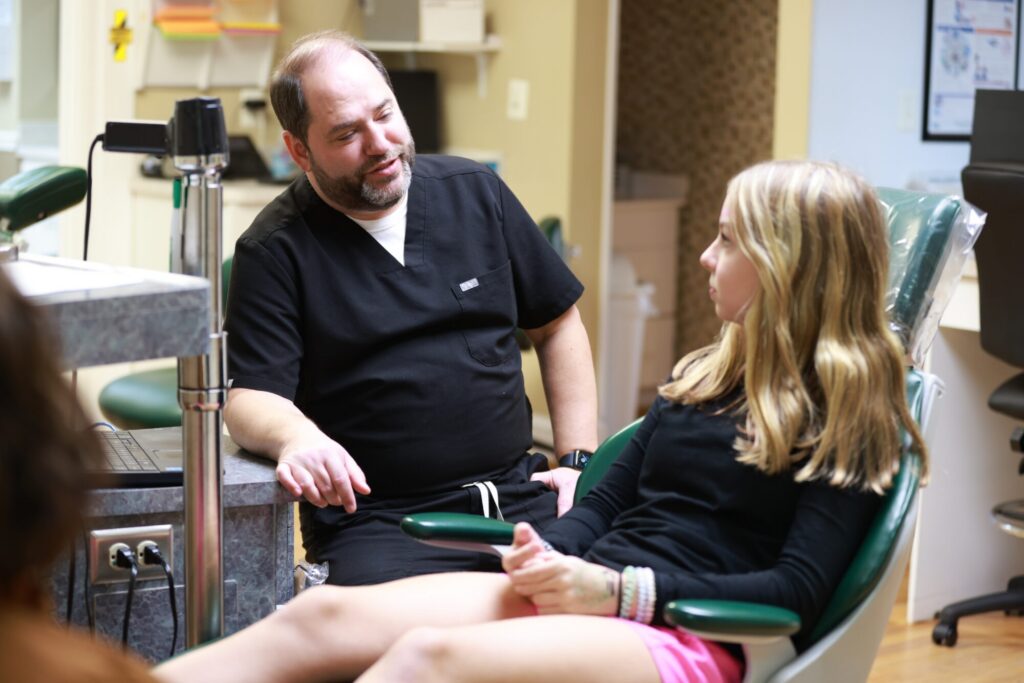
- Initial consultation and health history review. Your first visit includes a conversation about your goals, medical and dental history, and any past orthodontic care. This context shapes every decision that follows.
- Diagnostic records. Expect digital X-rays, 3D intraoral scans (digital mapping replaces messy putty impressions), clinical photos, and a detailed bite analysis. These records give board-certified expert orthodontists a complete picture of your teeth, roots, and jaw structure.
- Diagnosis. Dr. Griffin and Dr. Errera evaluate alignment, bite relationships, spacing, crowding, and any jaw concerns. This is where the “why” of your treatment is defined.
- Appliance selection. Based on your diagnosis, your orthodontist recommends the right tool for the job: LightForce 100% customized 3D-printed braces, Invisalign clear aligners, modern metal braces, or LightForce clear braces.
- Mapping movement and timeline. Your plan maps how teeth will shift, how often you’ll be seen (typically every 4 to 8 weeks), and when key progress markers should occur.
- Patient review. Before anything is placed, you’ll review the full plan, including your timeline and retention strategy. No surprises.
As board-certified expert orthodontists with 60 combined years of practice, Drs. Griffin and Errera bring deep experience to every diagnosis.
Benefits of a Customized Orthodontic Treatment Plan
A customized plan isn’t just about comfort. It changes the entire outcome of your care. When your treatment is designed around your biology, your lifestyle, and your goals, results are more predictable, more efficient, and more stable over time.
Here’s what you gain from personalized orthodontic care:
- More predictable results. Precise diagnostic data means fewer surprises. Dr. Griffin and Dr. Errera can anticipate how your teeth will respond and plan accordingly.
- Shorter treatment times when appropriate. When the appliance matches the patient’s biology and case complexity, teeth move efficiently. No wasted months on tools that aren’t the right fit.
- Reduced risk of mid-treatment setbacks. Thorough planning catches potential issues (impacted teeth, root concerns, bite interferences) before they become delays.
- Better aesthetic and functional outcomes. A great smile is more than straight teeth. A customized plan addresses how your bite functions and how your results will hold up for the long term.
- Transparent timeline from day one. You’ll know what to expect at every stage.
- Improved comfort through lifestyle-matched options. Whether you’re a middle schooler on the soccer field, a teen worried about photos, or an adult in client-facing work, your appliance should fit your life, not fight it.
Griffin & Errera Orthodontics serves patients of all ages, from children in early interceptive care to adults seeking refinement after prior treatment. That all-ages expertise, backed by board-certified credentials and over 40 years of experience, means your plan is informed by thousands of smile transformations across every stage of life.
Comparing Treatment Options: Braces vs. Clear Aligners
The braces vs. Invisalign decision is one of the most common questions patients ask. The honest answer: it depends on your diagnosis, your case complexity, and what matters most to you. Here’s how the main options compare.
| Option | Visibility | Typical Treatment Time | Case Complexity | Lifestyle Fit |
|---|---|---|---|---|
| LightForce 3D-Printed Braces | Visible brackets, tooth-colored option available | Often efficient due to 100% customized design | Mild to highly complex | Great for patients wanting precision without removable appliances |
| Modern Metal Braces | Most visible | 12 to 24 months typical range | All complexities, including the toughest cases | Durable, low-maintenance, works for active patients |
| LightForce Clear Braces | Discreet, tooth-colored | Similar to metal braces | Mild to complex | Ideal for teens and adults wanting a lower-profile look |
| Invisalign Clear Aligners | Nearly invisible | 12 to 18 months for many cases | Best for mild to moderate cases | Removable for meals, sports, and special events |
So how do orthodontists actually choose? Dr. Griffin and Dr. Errera match the option to the diagnosis first, then to your priorities. A complex bite correction may call for LightForce or metal braces, while mild crowding or spacing may be perfectly suited to Invisalign. Discipline matters too. Aligners only work if they’re worn 20 to 22 hours a day, so lifestyle honesty is part of the conversation.
At the end of your orthodontic consultation, you’ll understand exactly why one option was recommended over another, and you’ll have the final say.
Who Is a Candidate for Orthodontic Treatment Planning?
Almost anyone with concerns about tooth alignment, bite, or jaw function is a candidate for orthodontic evaluation. The right time to start depends on age, dental development, and the specific issue being addressed.
Common candidates include:
- Children ages 7 and up. The American Association of Orthodontists recommends a first evaluation by age 7, when early (Phase 1) interceptive care can guide jaw growth and prevent bigger issues later.
- Teens with developing permanent dentition. This is the most common age for full orthodontic care, and often the most efficient window for treatment.
- Adults seeking cosmetic or functional improvement. Adult tooth movement works beautifully at any age, and many adult patients choose Invisalign or LightForce clear braces for a discreet treatment that fits busy work and family life.
- Patients with crowding, spacing, overbite, underbite, or crossbite. These are classic indicators that an orthodontic consultation is worthwhile.
- Patients needing refinement after prior treatment. Teeth can shift over time, and a touch-up plan can restore your results.
Not sure if you’re ready for a full in-office visit? A virtual consultation is a convenient first step. Share a few photos, and Griffin & Errera Orthodontics will give you an initial sense of your candidacy and next steps, all from the comfort of home.
Frequently Asked Questions
How long does it take to create an orthodontic treatment plan?
The initial consultation and diagnostic records usually take about an hour. A detailed plan is typically ready to review shortly after, often at a follow-up visit, once your orthodontist has analyzed your scans, X-rays, and bite analysis. You’ll leave with a clear understanding of your options and timeline.
Can my treatment plan change during treatment?
Yes, and that’s a good thing. Your plan is a living document that’s refined as your teeth respond. Dr. Griffin and Dr. Errera monitor progress at every visit (typically every 4 to 8 weeks) and make adjustments to keep results on track. Minor changes to timing, elastics, or appliances are normal and part of thoughtful, personalized care.
Do orthodontists use 3D scanning and digital planning?
Yes. Modern orthodontics relies heavily on 3D intraoral scanning, digital X-rays, and software that maps tooth movement with precision. At Griffin & Errera Orthodontics, advanced digital tools like 3D scanning and LightForce 100% customized braces replace older methods and improve both comfort and accuracy.
How do orthodontists decide between braces and Invisalign?
The decision starts with your diagnosis. Complex bite corrections often favor braces (metal, clear, or LightForce), while mild to moderate alignment issues may be ideal for Invisalign. Lifestyle, age, and compliance also matter. Your orthodontist will explain which option offers the best result for your specific case.
Should I get a second opinion on my treatment plan?
Second opinions are completely reasonable, especially for complex cases or major treatment decisions. A good orthodontist welcomes them. Griffin & Errera Orthodontics offers free consultations, so getting another expert perspective is straightforward.
What’s included in an orthodontic treatment plan?
A complete plan includes your diagnosis, recommended appliance, treatment timeline, appointment cadence, and retention strategy. At Griffin & Errera Orthodontics, your plan outlines your diagnostic imaging, scheduled appointments, and retention appliances from the start.
Ready to See Your Personalized Plan?
Your smile is unique, just like you, and your treatment plan should reflect that. With board-certified expert orthodontists, modern digital technology, and over 40 years of transforming smiles, Griffin & Errera Orthodontics is ready to help you take the next step toward a healthier, more confident look.
Schedule your free consultation at any of our 3 convenient locations:
- Middleburg Office: 107 West Federal St., Middleburg, VA, 540-687-4000
- Warrenton Office: 179 Broadview Ave., Warrenton, VA, 540-347-1888
- Culpeper Office: 505 Radio Ln., Culpeper, VA, 540-825-8001
Prefer to start from home? Ask about our virtual consultation. Personalized care from a team you can trust is just a click or a call away, and the griffin & errera difference is ready whenever you are.